


Table of Contents


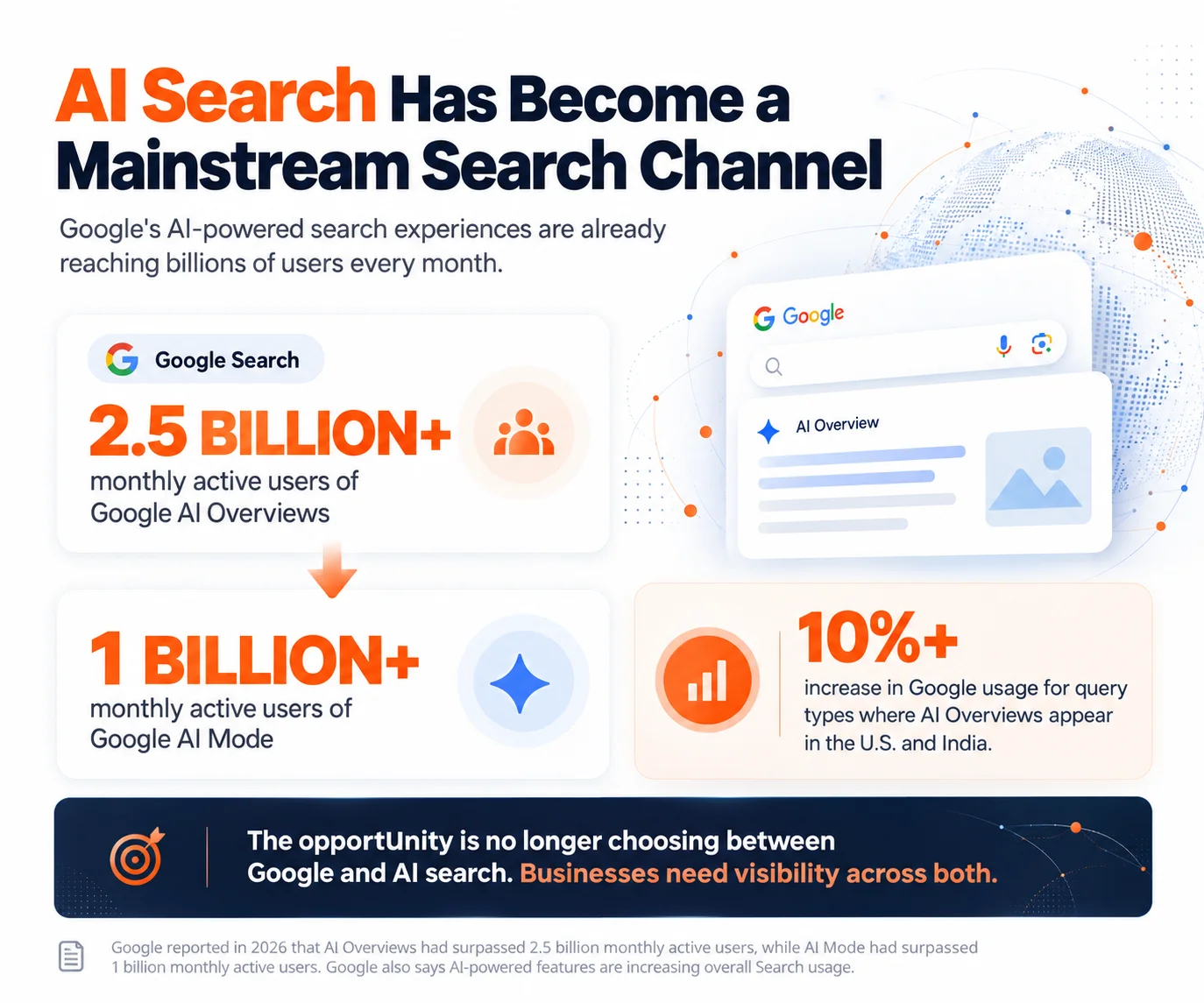
The way people look for information online has shifted more in the last two years than it did in the decade before that. For a long time, Google was the most-used platform for search visibility. In 2026, however, that picture is considerably more complex.
People are now actively using AI-powered platforms like ChatGPT Search, Perplexity, and Claude to find answers to their questions, compare options, and make purchasing decisions. These platforms function like intelligent assistants that scan the internet, process information from multiple sources, and deliver a single, direct answer to the user.
A business could have a webpage that ranks well in Google search results and still not appear in a single AI-generated response. That happens because AI platforms look for content structured in a way they can easily read and extract answers from. Without that structure in place, the webpage gets skipped entirely.
On the other hand, traditional Google search is not going anywhere. It still handles the vast majority of daily online queries. Many businesses choose to work with a search engine optimization agency to build their organic presence while also covering other digital channels. The reason is straightforward. Organic search builds lasting visibility over time, and having professional support makes that process considerably more focused and effective.
In 2026, covering both traditional and AI-powered channels is simply how search works now, and that is exactly what this guide covers.
Google SEO Fundamentals That Every Business Still Needs to Get Right
AI platforms are growing fast, but Google has not lost its footing. The vast majority of people still turn to Google first when they need to find something online. That alone makes organic Google rankings one of the most dependable sources of website traffic a business can build. Unlike paid ads that stop delivering the moment a budget runs out, organic rankings keep working in the background consistently.
Effective traditional SEO breaks down into three primary areas: technical SEO, on-page SEO, and link building.
Technical SEO: Why the Foundation Comes First
Technical SEO refers to everything behind the scenes on a website that makes it accessible to search engines. Google uses automated bots, commonly called crawlers, to visit and read website content. If a website has underlying technical problems, those bots may struggle to access or interpret the content properly. As a result, even genuinely valuable content may rank well below its potential.
The core technical factors to address include the following:
- Page speed: Google treats page loading time as a ranking factor because slow websites frustrate users. When users leave before engaging, Google interprets that as a poor experience and ranks the page lower accordingly.
- Mobile-first indexing: Google evaluates the mobile version of a website as its primary version. A website that is difficult to use on a smartphone will rank lower, regardless of how well it performs on a desktop.
- Core Web Vitals: These are specific user experience metrics that Google has confirmed as official ranking signals. They measure how quickly the main content becomes visible, how quickly the page responds to user interaction, and how stable the layout is while loading.
- Site structure and crawlability: A logical navigation structure, a submitted XML sitemap, and properly configured crawler instructions help Google discover and index all important pages efficiently. Without this, valuable content may never get picked up by Google's indexing process.
On-Page SEO: Communicating Relevance Clearly
On-page SEO refers to the elements within each page that tell both users and search engines what the page is about. Key factors include the following:
- Title tags: These should accurately describe the page content and include the primary keyword naturally, without forced repetition.
- Heading structure: H1, H2, and H3 headings create a clear content hierarchy that helps readers scan the webpage and helps Google understand how the content is organized.
- Natural keyword placement: Keywords should appear where they fit the content organically. Forcing them into sentences where they do not belong makes content awkward, and Google's algorithm recognizes and penalizes this process, which it calls keyword stuffing.
- Meta descriptions: A well-written meta description gives the reader a specific, honest reason to click through rather than a vague generic summary.
- Internal linking: Connecting related webpages within the same website helps Google understand topical relationships and distributes authority from established webpages to newer ones.
Link Building: Why External Recognition Still Carries Weight
When reputable websites link to a page, Google treats those links as endorsements of the content's credibility. A webpage that has earned links from trusted, relevant sources within its industry tends to rank more consistently than a comparable page without that external recognition.
Businesses that engage professional search optimization services for their link building strategy tend to see more consistent and measurable backlink growth. Building quality backlinks requires consistent outreach, relationship development, and content creation, all of which benefit from a structured, experienced approach rather than a sporadic one.
Answer Engine Optimization for ChatGPT Search, Perplexity, Claude
When someone searches on Google, they receive a list of links and choose which website to visit. By contrast, when someone uses ChatGPT Search, Perplexity, or Claude, the platform generates a single, unified response by synthesizing content from multiple sources. The user receives the answer directly without needing to visit any website.
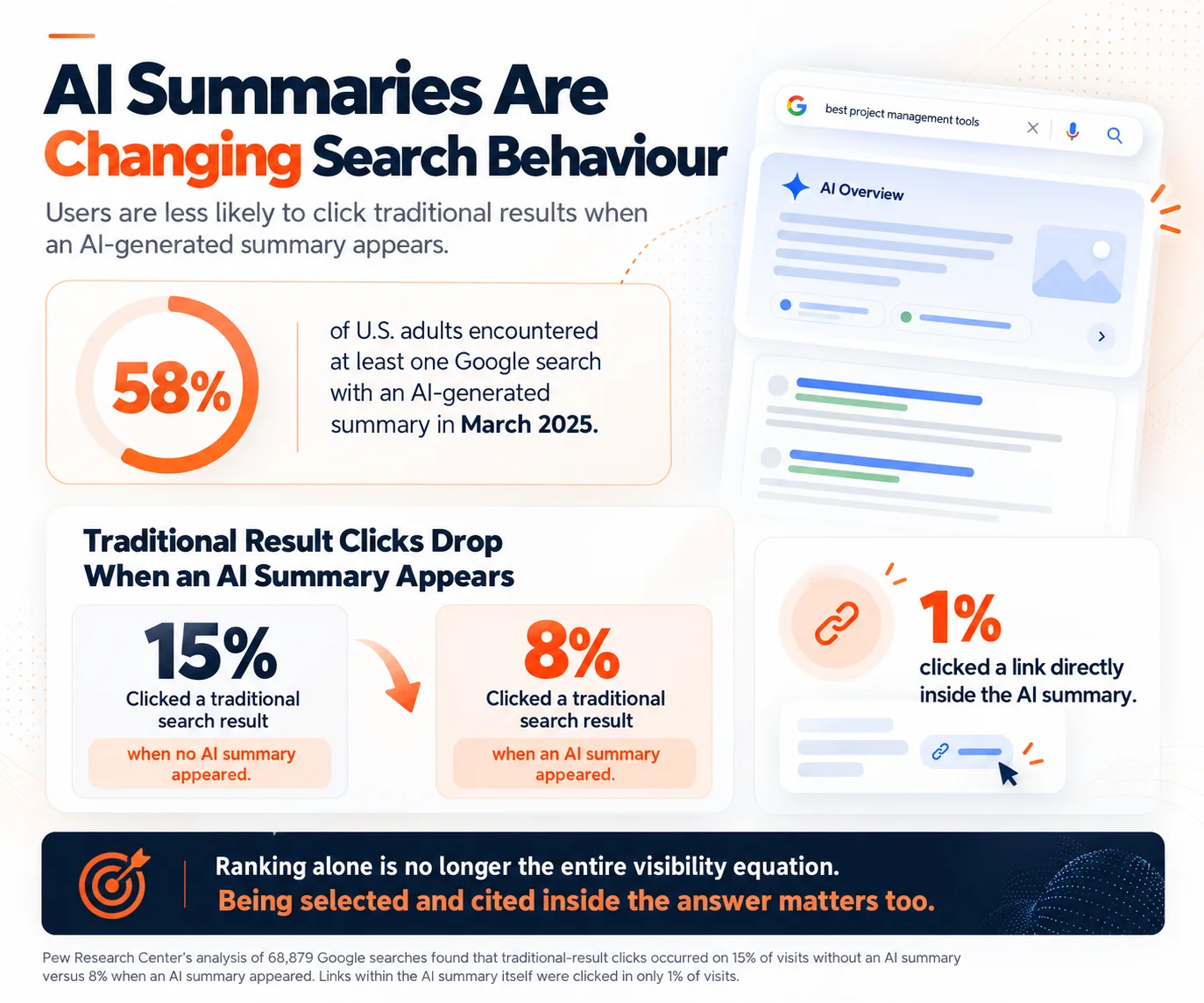
The strategic value of being cited in that response lies in brand authority. When an AI platform references a business's content as a source, it positions that business as a recognized expert in its field, which builds long-term trust with the audience.
What Makes Content Easy for AI Systems to Retrieve
AI answer engines identify content that clearly and directly answers a question. Content that buries the main point beneath a lengthy build-up is much less likely to be selected as a source. The following characteristics improve the likelihood of being retrieved and cited:
- Direct answers at the start of each section: If the key answer appears several paragraphs in, the system may overlook it in favour of a competing source that provides the same answer more immediately.
- Descriptive, question-based subheadings: Headings that reflect actual questions people ask are far more useful to AI systems than creative or vague headings.
- Short, plainly worded sentences: Long, complex sentence structures are harder for AI systems and human readers to process accurately. Shorter sentences are more likely to be extracted correctly.
- Dedicated FAQ sections: These organize information in a direct question-and-answer format, which is precisely what AI systems are trained to recognize and retrieve efficiently.
Writing for the Way AI Users Actually Search
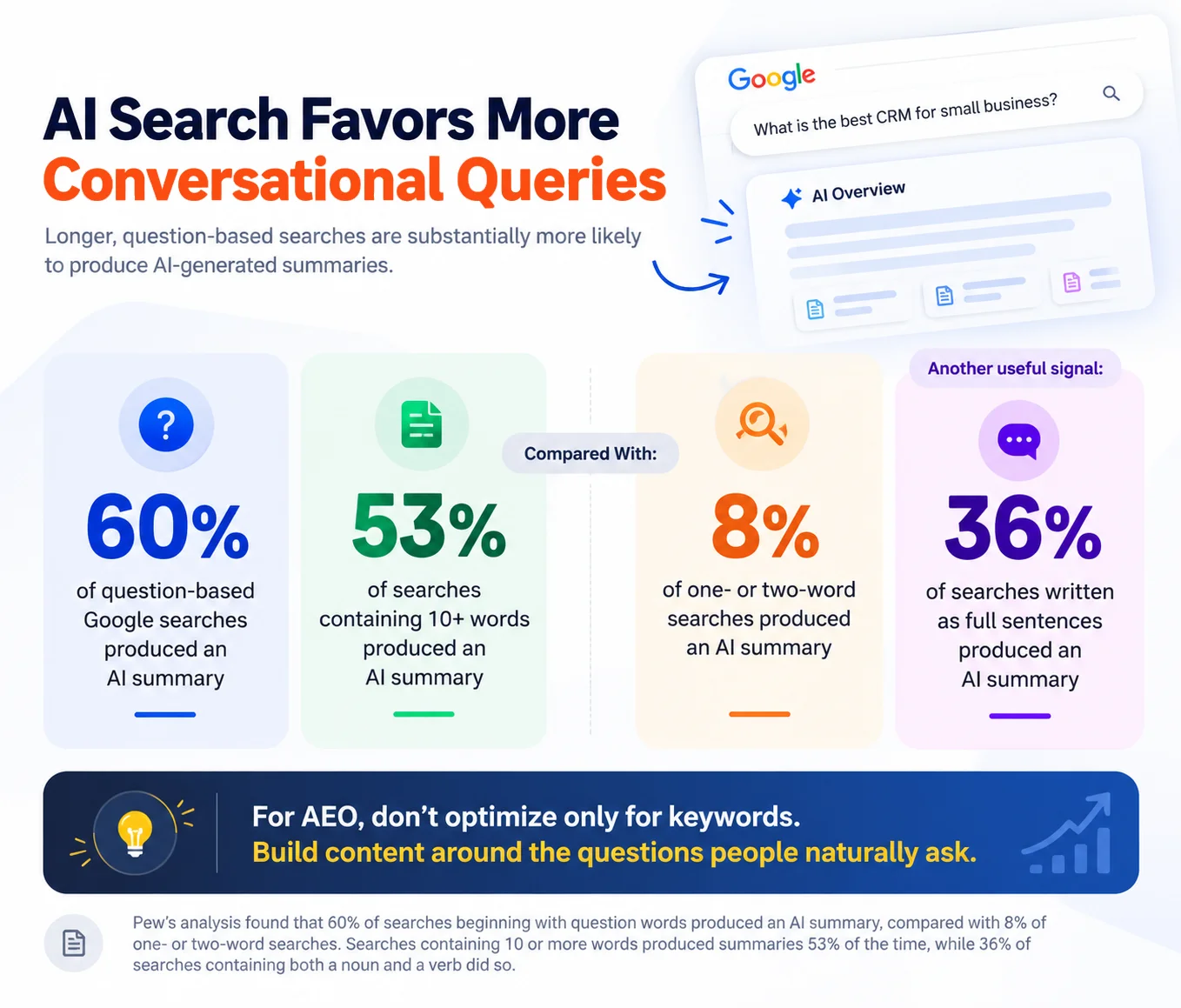
A traditional search user might type "best roofing options 2026." An AI platform user is more likely to ask, "What is the most durable roofing material for a house in a rainy climate?" That conversational phrasing changes what the content needs to look like to be a useful source. Content that addresses specific scenarios and anticipates follow-up questions tends to perform considerably better with AI platforms, while still maintaining a professional tone throughout.
What Is Position Zero and Why Is Every Business Competing for It Right Now?
Featured snippets are the highlighted answer boxes that appear at the very top of a Google search results page, above all regular organic listings. They are often referred to as position zero. Their strategic importance has grown considerably in 2026 because of a specific development in how Google itself works.
Google introduced AI Overviews in May 2024. These are AI-generated summaries appearing at the top of many search results pages. These overviews pull content primarily from featured snippets and top-ranking pages. Therefore, a business that wins a featured snippet also has a significantly higher chance of appearing in Google's AI Overview for the same query. This creates visibility in two separate locations on the same results page.
Many businesses work with an experienced AI search engine optimization (SEO) agency specifically for this part of their strategy. Identifying which queries in a niche already trigger featured snippets, building content that targets those positions, and monitoring changes in snippet ownership over time benefit from a professional, research-led approach.
How to Structure Content to Win Featured Snippets
Earning a featured snippet requires ranking reasonably well for the query in question and structuring content so Google can extract a clean, useful answer. The following practices increase the likelihood of winning one:
- Identify which queries in a niche already display a snippet on Google, then build content that answers those questions more clearly than the existing source.
- Write a concise, direct answer within the first two to three sentences of the relevant section, as Google typically pulls snippet text from this opening passage.
- Use the target question itself as the subheading for that section, which signals clearly to Google that the section directly addresses that query.
The Three Main Featured Snippet Formats
- Paragraph snippets suit definition and explanation queries. A two- to three-sentence direct answer works best here.
- List snippets suit process-based and ranking queries. Numbered lists and clearly formatted bullet points increase the chances of winning this format.
- Table snippets suit comparison queries where structured information is most helpful to the reader.
What Is Topical Authority and Why E-E-A-T Signals Matter for Search Rankings
Both Google and AI answer engines prefer content from sources that have demonstrated genuine credibility and expertise in a specific subject area. This is where topical authority and E-E-A-T, which stands for Experience, Expertise, Authoritativeness, and Trustworthiness, become central to any search strategy.
What Topical Authority Means and Why It Matters
Topical authority is essentially how well a website has proven itself on a specific subject. A website that consistently publishes deep, well-researched content on one topic earns far more credibility than one that spreads itself across dozens of unrelated subjects without going into real depth on any of them.
When an AI system generates a response about a particular topic, it is more likely to draw from a source that consistently publishes accurate, in-depth content there. A website that published a single article on the topic years ago carries far less weight than one that has built a clear, sustained publishing history around that subject.
Building topical authority involves the following:
- Mapping out all relevant subtopics and specific questions within the core niche
- Creating dedicated, thorough content for each subtopic over time
- Linking related pieces of content internally so both readers and crawlers can see how pieces connect
- Revisiting and updating published content regularly to keep it accurate and current
Understanding E-E-A-T: What Each Letter Means
Google uses this E-E-A-T framework to evaluate whether content comes from a genuinely credible source, particularly in fields where inaccurate information can cause real harm to readers.
- Experience means the content reflects direct, real-world involvement with the subject rather than second-hand knowledge.
- Expertise means the author or organization has recognized knowledge, qualifications, or a documented professional track record in the relevant field.
- Authoritativeness means the broader industry recognizes the source as a credible voice, demonstrated through backlinks from respected publications and features in trusted media outlets.
- Trustworthiness means the website is accurate, transparent, and professionally maintained, with content that avoids exaggerated or unverifiable claims.
Businesses that hire a professional search engine optimization service provider tend to build these signals more consistently over time. A specialist team brings the tools, content processes, and outreach expertise needed to demonstrate genuine authority across all four dimensions of E-E-A-T, rather than addressing them sporadically.
AI Search vs Traditional Search Differences
AI search and traditional search are two systems that operate on fundamentally different mechanics and reward different qualities in content. Understanding those differences is what allows businesses to allocate their content efforts effectively across both channels.
How Each AI Search and Traditional Search Produces Results
Traditional Google search crawls and indexes billions of web pages. When a user submits a query, Google ranks the most relevant pages from that index and presents them as an ordered list of links. The ranking is determined by hundreds of signals, including domain authority, content relevance, and technical performance.
AI answer engines use large language models to generate a single cohesive response. Many have real-time web access, meaning they actively retrieve and read web pages at the moment a query is submitted. The system then synthesizes information from multiple sources into a direct, conversational answer. The user does not need to visit any website to receive the information for which they are looking.
What Each System Rewards in Content
Traditional search prioritizes:
- Domain authority built over time through quality backlinks from reputable sources.
- Fast, technically sound website performance across desktop and mobile.
- A consistent content publication history on relevant topics.
- Positive user behaviour signals such as longer time on page and lower bounce rates.
AI answer engines prioritize:
- Direct, clearly written answers without unnecessary preamble or filler text.
- Content from sources with established topical authority and credibility signals.
- Well-organized page structure with descriptive headings and short paragraphs.
- Comprehensive topic coverage that addresses a subject from multiple relevant angles.
The Difference in How Users Engage
A Google user typically scans through several results before deciding what to click, which makes titles, meta descriptions, and opening sentences critical. An AI search user, on the other hand, expects a complete and reliable answer from the single response they receive. They tend to be further along in their decision-making process and are looking for something specific. Content that gets directly to the point serves this type of user far better than content that builds slowly toward its main idea.
How to Build One Content Strategy That Works for Both Google and AI Search
Traditional Google SEO and answer engine optimization may seem like two separate disciplines, but they share considerable common ground. A thoughtfully constructed content strategy can satisfy the standards of both channels simultaneously. After all, both traditional search and AI platforms are ultimately designed to surface the same thing: accurate, credible, and genuinely useful content.
Content Qualities That Work Across Both Channels
- Genuine depth of coverage: Both Google and AI platforms favour content that goes beyond the basics and addresses a subject from multiple relevant angles. Surface-level content consistently underperforms on both channels.
- Clear, query-reflective headings: Headings that mirror how people phrase their questions help Google understand each section and make it easier for AI systems to extract specific answers from within longer pieces of content.
- Plain, accessible language: Straightforward, jargon-free writing serves the reader first. Both channels are built to surface content that is genuinely helpful, and plain language is one of the clearest markers of that helpfulness.
- Regular content updates: Outdated information is a liability on both channels. Google rewards freshness, and AI platforms using real-time web access favour current, accurate sources over older ones.
Many businesses find that working with an experienced SEO consulting services provider helps maintain the consistency that both Google and AI platforms respond to. Regular audits, structured content calendars, and ongoing performance reviews all contribute to the kind of sustained publishing discipline that builds authority over time.
Search in 2026 has changed, and it will keep changing. Google is no longer the only platform that matters, and businesses that treat it as such are already falling behind. The good news is that ranking on Google and AI platforms does not require two entirely different strategies. It requires one well-built strategy. Businesses that get the content fundamentals right and maintain them consistently tend to perform well across both. Working with a reliable search engine optimization agency makes that consistency far easier to sustain over the long run. The platforms will evolve. However, the expectation behind all of them stays the same: show the most accurate and useful content available. That has always been the goal, and it still is.
Frequently Asked Questions
1. What is the difference between SEO and AEO, and why does a business need both?
SEO helps a website rank in traditional search engines like Google through content quality, technical performance, and backlinks. AEO, on the other hand, focuses on getting that content cited by AI platforms like ChatGPT Search, Perplexity, and Claude when they generate answers. A business that only focuses on one channel is leaving a growing portion of its potential audience completely unaddressed.
2. How does a featured snippet connect to AI search visibility on Google?
3. What does E-E-A-T mean, and how can a business strengthen its signals?
4. Can a business appear in AI-generated responses without also ranking well on Google?
5. Is working with a professional SEO provider worthwhile when also building an AEO strategy?
Request a
Free Quote Today!


