


Table of Contents


Software development is evolving fast, and, in 2026, new coders are no longer starting their coding journey the same way people did even just a few years ago.
AI is now part of daily development work, helping people write code, fix mistakes, and even plan entire applications. Instead of doing everything by hand, developers now work with AI tools that assist at different levels of coding. This shift has created new styles of coding that newcomers to software development need to understand clearly.
Two terms that often come up today are ‘vibe coding’ and ‘agentic coding’. These are not just trendy names. They describe two very different ways of using AI while building software. One focuses on flow and creativity, while the other focuses on planning and decision-making. Both styles are useful, but they work in very different ways and suit different kinds of learners.
Many beginners to coding are confused when they hear these terms because most explanations assume familiarity with basic programming concepts, such as programming languages, syntax, variables, data types, control structures, functions, algorithms, and debugging. But these ideas are simple when they are explained properly.
Whether you want to build a small app, automate tasks, or work with an AI agent development company, understanding these approaches helps these new coders choose the right path from the start of their career.
In this post, you will learn about both vibe coding and agentic coding, and how new coders can approach AI-powered development in 2026.
What Vibe Coding and Agentic Coding Mean for Beginners in 2026
To understand how AI-driven development works today, it helps to break these ideas down step by step. The sections below explain everything so coding beginners can follow along easily.
What Vibe Coding Is and How It Feels to Work With AI
Here is a simple explanation of vibe coding and how it feels to work with AI.
1. Vibe Coding Focuses on Flow, Creativity, and Momentum
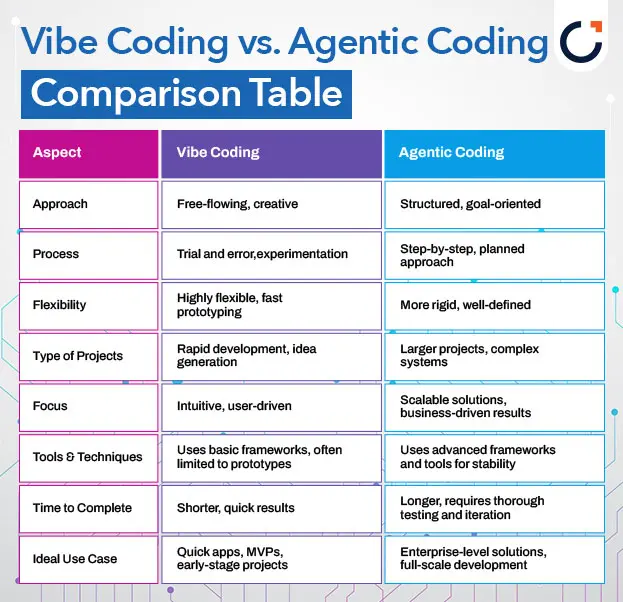
Vibe coding is about staying in a creative flow while building software with AI support. Instead of planning every detail upfront, the developer writes prompts, experiments with ideas, and lets AI help shape the code step by step. The goal is to keep moving without stopping too often to think about structure or long-term planning. This approach feels natural for beginners in coding because it removes pressure.
For example, a beginner or new coder might say, “Create a simple login page,” and the AI generates code instantly. If something does not look right, the beginner adjusts the prompt and continues. Mistakes feel less scary because AI can quickly suggest fixes. This creates confidence early on.
Vibe coding works well when learning basics, testing ideas, or building small tools. However, it depends heavily on intuition and experimentation. While this feels freeing, it can become messy if projects grow large. Still, for beginners in 2026, vibe coding is often the easiest way to start using AI in software development.
2. Why Beginners Feel Comfortable with Vibe Coding Early On
Most beginners in coding struggle with the fear of making mistakes. Vibe coding reduces this fear by allowing trial and error. Instead of memorizing syntax rules, beginners describe what they want in simple words. AI then turns those words into code. This lowers the barrier to entry significantly.
For instance, someone with no background in coding can build a basic website by guiding AI through small steps. If something breaks, they simply ask AI to fix it. As a result, learning feels friendly instead of overwhelming. New coders stay motivated because they see quick results.
However, this comfort can hide gaps in understanding. When beginners rely only on vibe coding, they may not learn why certain code works or does not work. Over time, this can cause confusion when AI suggestions stop making sense. Even so, as a starting point for new coders, vibe coding builds confidence and curiosity.
3. How Vibe Coding Differs from Real Coding
Some people say vibe coding is not “real coding,” but this idea is misleading. Vibe coding still creates real code that runs on real systems. The difference is how the work is done. In traditional coding, the human plans and writes every line. In vibe coding, the AI handles many details while the developer guides the process.
For example, a new coder might say, “Build a simple calculator app with add and subtract buttons.” The AI creates working code. The app runs, buttons work, and results appear. This is real software, even though the beginner did not write each line. However, beginners in coding should still learn basic coding ideas. If the calculator stops working or needs changes later, understanding how the code works becomes important.
4. How Vibe Coding Uses AI as a Creative Partner
In vibe coding, AI acts like a helpful assistant rather than a manager. It responds to prompts, gives examples, and improves code based on human feedback. The developer remains in control but does not worry about deep planning.
For example, if someone is building a simple app, they may ask AI to “add a button that saves user input.” AI writes the logic, explains it briefly, and moves on. This back-and-forth feels like a conversation rather than formal development.
This style suits beginners who learn by doing. They see results immediately and adjust as they go. However, because AI follows instructions without questioning goals, it does not plan. This means vibe coding works best for small or experimental projects, not complex systems.
5. Where Vibe Coding Fits into Modern AI-Assisted Development
In 2026, vibe coding is common in learning environments, personal projects, and early-stage ideas. Many tutorials now teach through examples rather than theory, making vibe coding a natural fit. It also helps people from non-technical backgrounds explore software development without fear.
However, professional software developer teams usually combine vibe coding with more structured methods. For instance, someone may prototype features using vibe coding before handing work to a structured AI system or an AI agent development company that focuses on long-term software and website design.
In short, vibe coding is not ‘wrong’ or ‘incomplete’. It simply serves a different purpose from traditional coding. It helps new coders start coding quickly, feel confident, and enjoy building with AI.
6. Limits of Vibe Coding Beginners Should Understand
While vibe coding feels easy, it has limits that new coders should know early. Because it lacks planning, projects can become confusing as they grow. Code may work today but break tomorrow when features are added.
For example, AI might generate repeated logic across files, making updates harder to integrate later. Beginners may not notice these issues until projects become difficult to manage. Furthermore, vibe coding depends heavily on the quality of your prompts. Poor prompts lead to poor results.
Understanding these limits helps beginners or a new coder use vibe coding wisely. It works best when combined with learning basic coding concepts slowly. This way, creativity stays high while understanding grows steadily.
7. How Is Vibe Coding Different from Prompt Engineering?
Prompt engineering focuses on writing very specific and detailed instructions, so the AI gives very precise results. The wording, order, and structure of the prompt matter a lot. For example, a prompt engineer might write, “Create a login form using HTML and CSS with two input fields, a submit button, and basic validation.” Small changes in wording can change the result. For example, "Create a login form with input fields and validation" might result in basic field checks, while "Create a login form with text boxes and simple validation" could lead to a different interpretation, affecting both website/software design and validation rules.
Vibe coding is more relaxed and conversational. A beginner might simply say, “Make a simple login page.” The AI creates something basic, and if it is not right, the beginner says, “Make it cleaner” or “Add an error message.” Over time, a new coder naturally learnd how better prompts improve results, without feeling pressured to be perfect from the start.
How Agentic Coding Works and Why It Feels More Structured
Agentic coding takes a very different approach to AI-driven development. Instead of focusing on flow, it focuses on planning and decision-making.
How Agentic Coding Thinks Before Writing Code
Let’s see how agentic coding thinks before writing code.

1. Agentic Coding Uses AI That Plans and Decides
Agentic coding involves AI agents that work toward goals instead of reacting to single prompts. These agents do more than just respond. They plan steps, choose what to do next, and review their own work before moving forward. The developer sets the goal and basic rules, and the AI follows that direction carefully.
For example, a beginner might ask, “Build a simple blog app and make sure it works properly.” The AI agent first creates the basic layout, then adds features like creating and viewing posts. After that, it checks whether each part works and fixes issues it finds. The new coder doesn’t need to be guided at every step.
This approach feels slower at first, but it is safer. Work follows a clear plan, mistakes are caught early, and projects stay organized, which helps beginners learn structured thinking.
2. Why Agentic Coding Helps with Larger Projects
As projects grow, simple changes can easily create confusion if there is no plan. Agentic coding helps avoid this because the AI keeps track of what already exists and what the long-term goal is. Instead of making random changes, the AI improves the current work carefully.
For example, imagine a beginner or new coder builds an app where users can sign up, log in, and edit profiles. Over time, similar code is repeated in many places. An AI agent may notice this and suggest creating a shared function instead of repeating the same logic. It may also test each feature after changes are made to make sure nothing breaks. Beginners working with an AI agent development company often see this in real products. This approach keeps growing systems organized and easier to maintain.
3. How Beginners in Agentic Coding Interact with AI Agents Differently
In agentic coding, beginners focus on stating clear goals instead of giving many small instructions. For example, a beginner might say, “Build a task tracker app with login and reminders.” The AI agent then plans the work. It first sets up the user login, then creates the task list, and, finally, adds reminders. After each step, it checks whether everything works before moving forward.
This process teaches beginners or new coders how systems are built in a logical order. They begin to understand flow, structure, and why certain steps come before others. They do not need to write every line of code, but they still see how pieces connect. Unlike vibe coding, agentic coding rewards patience. Over time, beginners gain deeper confidence because they understand how and why the system works.
4. When Agentic Coding Feels Challenging at First
Agentic coding can feel heavy for beginners because it does not give instant results. There is more reading, reviewing, and waiting compared to vibe coding. AI agents may pause and ask for confirmation before making changes, which can feel slow at first.
However, this slower pace has value. It encourages new coders to think clearly about what they are building and why each step matters. Instead of rushing, they learn to review work and understand decisions. This helps avoid shortcuts that cause problems later. While the learning curve feels steeper, the benefit is long-term clarity in coding. Beginners gain better control and confidence over coding as projects grow.
5. Where Agentic Coding Fits into AI-Driven Development
In 2026, agentic coding will be widely used in serious software projects, automation tools, and professional work environments. Many modern tools (GitHub Copilot, Tabnine, or Replit) now use multiple AI agents that work together, with each agent handling a specific part of the system. These AI tools assist in writing and completing code, and can interact with other agents for testing, debugging, and optimizing.
For example, one agent may focus on building features, while another checks for errors or tests the system. This teamwork keeps projects organized and reduces mistakes.
For beginners who want to build reliable software or work with software development teams, understanding agentic coding is helpful. It reflects how real software development happens behind the scenes, where planning, checking, and coordination matter as much as writing code.
Why Does the Developer’s Shift in Thinking Matter in AI-Powered Coding?
Now that you understand both styles of coding, let’s look at how they are changing the way developers think and work in everyday situations.
1. From Writing Code to Guiding Systems
In AI-powered coding, developers no longer need to write every line by hand. Instead, they guide AI systems by explaining what they want to achieve. This changes the focus from typing code to thinking clearly about goals.
This is important for beginners as it reduces pressure to learn. You do not need to be fast or perfect at writing code. What matters more is explaining ideas in a clear and simple way. Learning to describe problems and desired outcomes with AI helps beginners communicate better and improves how they think about building software overall.
2. Understanding Responsibility in Agentic Systems
Agentic coding gives AI more independence, but responsibility still lies with humans. Developers still need to check what the AI creates and decide if it makes sense.
For beginners, this is a valuable lesson. AI can help with tasks like generating code, automating repetitive processes, debugging, testing, and suggesting improvements, but it can also make mistakes or misunderstand their goals. Reviewing results, testing features, and confirming changes should become important habits. This teaches accountability early. Beginners learn that using AI does not mean blindly trusting everything it creates. Instead, they learn to work carefully, which leads to better and safer software.
3. Learning to Think in Steps, Not Commands
Agentic coding encourages thinking in steps instead of giving single commands. Instead of asking for one small action, beginners learn to think about the full process of developing code or solving a problem. This approach helps them move beyond isolated actions like writing a single function or fixing one bug.
For example, building a feature (such as a software project, a login system, a search bar, a user profile page, or a shopping cart) involves planning, building, testing, and fixing issues. This way of thinking mirrors real problem solving. It helps beginners break large tasks into smaller, more manageable parts.
This mindset is useful beyond coding. It improves planning, organization, and logical thinking in everyday tasks, making beginners more confident problem solvers.
4. The Truth About Building Apps with AI in 2026
AI makes building apps faster, but it does not remove the need for thinking. Good apps still require clear ideas, careful testing, and thoughtful decisions. Beginners who expect AI to do everything may feel disappointed when problems appear. Understanding the reality of what AI can and cannot do early in the development of a software tool helps set healthy expectations for what it can and cannot do well.
AI is a tool, not a replacement for understanding. Beginners who know this focus on learning how things work when it comes to software development instead of finishing a project quickly. This leads to stronger skills and better results.
5. How Teams Use Agentic Coding at Scale
Large teams use agentic coding to manage complex systems without chaos. As projects grow, tracking changes and maintaining their quality becomes harder. Agentic coding helps by keeping work organized and consistent. An AI agent development company often uses agentic systems to handle repetitive tasks, test features, and maintain standards. Beginners who understand this early in their careers gain an enormous advantage over their colleagues by learning how real teams work and why structure matters. This knowledge prepares them for professional environments and collaborative projects.
What Is the Future of Vibe Coding and Agentic Coding?
Looking ahead helps beginners decide what skills will matter most as AI-driven development continues to grow.
1. Vibe Coding Will Stay as an Entry Point
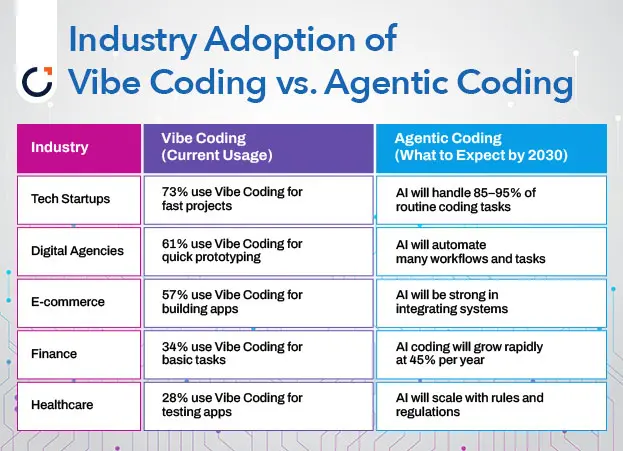
Vibe coding will continue to be a popular starting point for new coders. It lowers the barrier to entry by allowing people to start with ideas instead of technical rules. This makes learning less intimidating and more enjoyable.
Over time, vibe coding may improve and become more refined, but it will likely remain informal and flexible. Beginners will continue using it to explore ideas, test concepts, and gain confidence before moving on to more structured approaches to software development.
2. Agentic Coding Will Power Serious Projects
Agentic coding will play a major role in building large and long-term systems. These projects need planning, consistency, and teamwork. Agentic coding supports this by allowing AI to manage tasks across time while following clear goals. Beginners do not need to start here, but they should slowly move toward this goal as they gain experience. Learning agentic ideas helps beginners understand how professional systems are built and prepares them for complex projects.
3. Hybrid Approaches Will Become Common
In the future, most developers will not choose only one style of coding. They will combine vibe coding and agentic coding based on what they need.
For example, they may use vibe coding to explore ideas quickly and agentic coding to refine and scale them. This balanced approach offers both speed and stability. Beginners who understand both styles will adapt more easily. They will know when to move fast and when to slow down and plan carefully.
4. Learning Mindset Will Matter More Than Tools
AI tools change quickly, but thinking skills are a constant. In AI-powered development, the ability to learn, adapt, and understand matters more than mastering one tool. New coders should focus on building a learning mindset instead of chasing trends. Understanding concepts, asking questions, and thinking clearly will always be useful. This mindset prepares beginners for changes in technology and helps them stay confident even as tools and methods evolve.
Vibe coding and agentic coding are not rivals; they are two ways of working with AI that serve different needs. For new coders in 2026, understanding both helps avoid confusion and false expectations. Vibe coding builds confidence and creativity, while agentic coding builds structure and responsibility. Learning when and how to use each approach prepares beginners for real development work and future collaboration with an AI agent development company.
Frequently Asked Questions
1. What are agentic coding tools?
2. How does vibe coding differ from context engineering?
3. What are the practical implications of agentic AI?
4. Can beginners switch between vibe coding and agentic coding?
Request a
Free Quote Today!


