Marketing has always been about reaching the right person with the right message at the right time. The difficulty of doing it successfully has been doing that at scale, without burning through resources or relying on guesswork. Artificial intelligence is changing that equation in ways that are now visible across almost every category of marketing practice.
Companies are investing in AI not because it is the newest thing available, but because the results are measurable and the competitive pressure from early adopters is real. Businesses that built AI-driven marketing programs two or three years ago are now operating with advantages that competitors relying on manual processes are finding genuinely difficult to catch up to.
The range of marketing applications of AI today goes well beyond chatbots and automated email. AI is now shaping how marketing campaigns are planned, how audiences are segmented, how content is distributed, and how decisions about budget allocation are made. The full scope of modern digital marketing services now depends on AI to a degree that was not the case even five years ago.
This blog covers what AI is doing inside marketing operations, how personalization functions at a practical level, and what growth strategies look like when they are built on data and machine learning rather than instinct.
How Is AI Reshaping Marketing Operations?
Marketing operations have changed at a structural level, not just at the surface where campaigns get executed. AI is affecting how decisions get made and how much a team can trust the data behind those decisions.
The two areas below cover that shift: how AI changes the decision-making process and how the underlying data foundation determines whether AI systems can produce accurate insights and meaningful outcomes.
For most of digital marketing's history, ad campaign decisions came down to gut feelings built up over years. Veteran marketers would lean on what worked last time. They might also assume that the same emotional triggers that worked for one customer segment would influence another, even when the two audiences had different needs, behaviours, and decision-making patterns.
That instinct hasn't disappeared with AI. Marketers are still very much in the driver's seat. What's changed is the amount of evidence they have to work with before making a call. Machine learning models can evaluate audience data, engagement history, and behavioural signals at a scale no analyst could realistically get through. This shifts campaign decisions away from guesswork toward something closer to pattern recognition.
The difference shows up most clearly in multi-channel programs, where the number of moving parts adds up fast. A single campaign might be running across paid ads, email follow-ups, social posts, and retargeting all at once. Trying to manage that manually, while also making sense of cross-channel attribution, quickly turns into more than one team can reasonably keep up with. That's really where AI earns its place. It takes on the kind of workload that was never going to scale well with spreadsheets and manual tracking in the first place.
The Data Foundation That Makes AI Useful
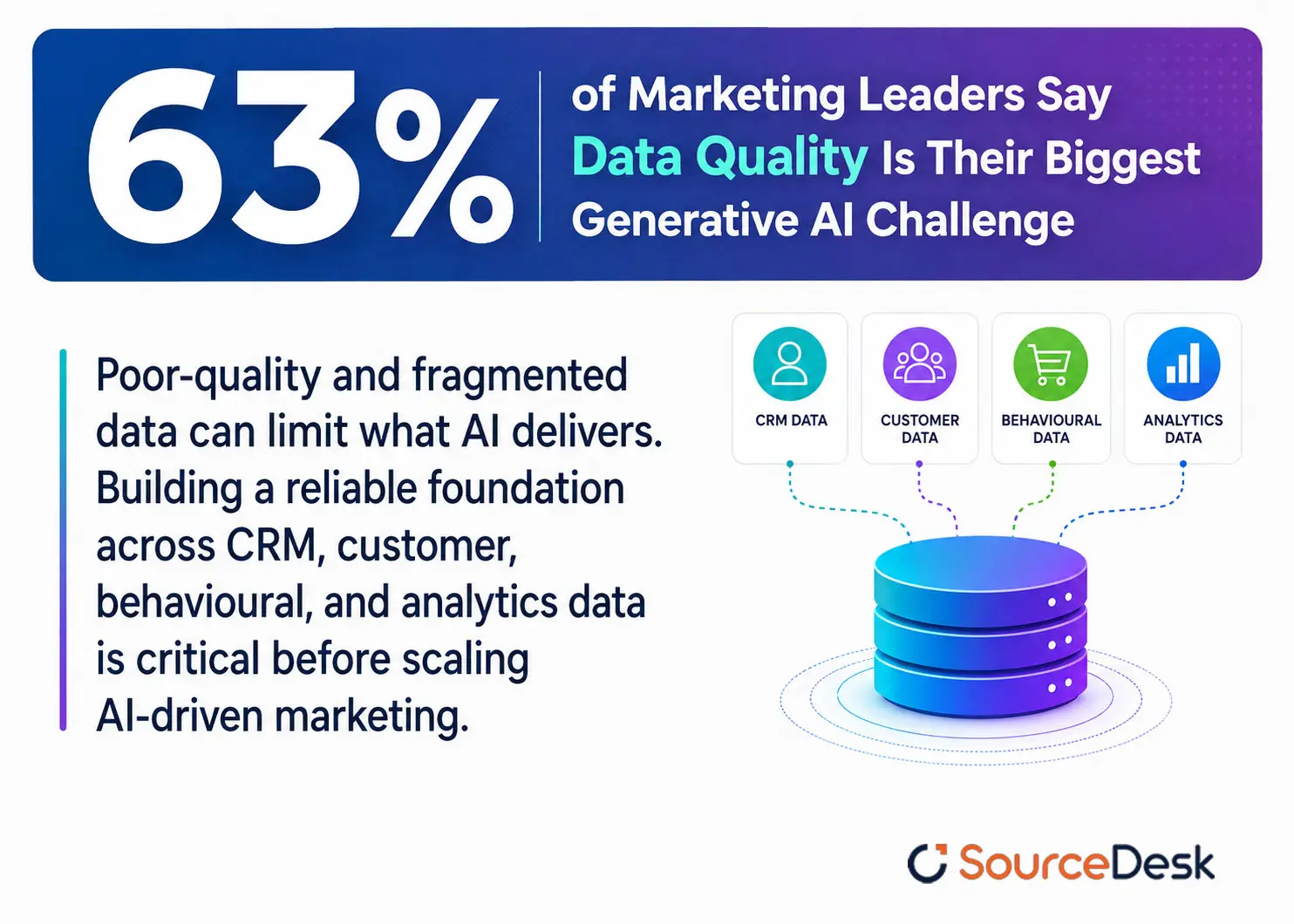
Behind every effective AI-driven ad campaign, there is a data infrastructure that determines how useful the AI actually is. Customer data platforms, CRM integrations, behavioural tracking, and on-site analytics all feed AI systems and shape the quality of their outputs.
Organizations that lack this foundation often wonder why AI tools produce underwhelming results. The tool is only as useful as the data it processes. This is one of the reasons experienced marketing teams invest significant time in data architecture before activating AI tools.
Marketing Automation: What It Actually Does
Automation is probably the most discussed AI application in marketing, though it is frequently reduced to a narrower description than it deserves. The common assumption is that automation simply sends emails on a schedule. In practice, AI-powered automation operates across a much wider surface area.
Email Campaigns and Behavioural Triggers
Artificial Intelligence email systems provide a lot more than simply email campaigns. The systems can monitor individual behaviour with respect to emails: when they open them, which links they click, and how much time they spend reading the content. The behavioural patterns allow the system to change the content, timing or even subject lines of the email sent to each person separately.
If a person opens the emails every Thursday evening, the emails will be sent during that time. If a person only clicks on the product comparisons, he/she will receive more such emails. All these changes occur in an automated process, which leads to the campaign being continuously improved.
Paid Advertising Optimization
Programmatic advertising, which accounts for the majority of digital display spending globally, depends almost entirely on AI. Bidding decisions happen in real time, processing hundreds of variables in milliseconds to determine where an ad appears and what the advertiser pays for each impression.
AI systems manage audience segmentation, budget distribution, creative rotation, and negative keyword management more efficiently than any manual process could match. For businesses investing heavily in paid media, this kind of automation represents meaningful cost reduction alongside better performance data.
Areas where AI consistently improves paid advertising outcomes:
- Bid adjustments that account for device, location, and time-of-day signals
- Automatic pausing of underperforming ad variations before they waste further budget
- Audience expansion through lookalike modelling based on existing customer data
- Budget redistribution from weaker campaigns to higher-performing placements in real time
AI tools handle social media scheduling with sophistication that extends beyond choosing an optimal posting time. They analyze which content formats perform best with different audience segments, detect shifts in engagement patterns, and flag changes in sentiment that might signal a reputational concern before it becomes a larger problem.
For companies that specialize in B2B digital marketing services, that kind of monitoring carries particular weight. B2B buyers are active on LinkedIn and industry forums, and catching a negative signal early gives the marketing team time to respond before the issue reaches a wider audience.
Personalization: Moving Beyond First Names in Emails
Personalization has been a marketing priority for years, but it spent most of the past decade stuck at a surface level: inserting a subscriber's first name into a subject line or showing them a product they had already viewed. AI has moved personalization to a different plane entirely.
Dynamic Content and Real-Time Adaptation
Modern AI systems can change what a website visitor sees based on who they are, where they came from, and what they have previously done on the site. A first-time visitor arriving from a paid ad might see introductory messaging and social proof. A returning visitor who previously viewed pricing pages might see case studies and a more direct call to action.
This content switching happens automatically, using visitor profiles built from behavioural data. Different users see different versions of the same page without the business needing to maintain separate landing pages for each segment.
Predictive Personalization
Beyond reacting to what a user has already done, AI can estimate what they are likely to do next. Predictive personalization uses historical behavioural patterns across large user populations to identify which content or offer an individual is most likely to act on.
An e-commerce business might surface products a customer has not searched for but is statistically likely to buy, based on purchase patterns from similar buyers. A digital marketing company building lead nurturing sequences might use predictive scoring to identify which prospects are most likely to convert within the next thirty days.
This has direct implications for resource allocation. Rather than treating all prospects equally, marketing teams can concentrate effort where predictive models suggest conversion is most probable.
Personalized Customer Journeys
The path from first awareness to purchase rarely follows a predictable, linear sequence. AI systems map the actual paths customers take rather than the idealized path marketers assume they will take and use those maps to build nurturing sequences that reflect behavioural reality.
Someone who enters the ad funnel through a thought leadership article and spends three weeks reading comparison content before requesting a demo follows a very different path than someone who clicks a paid ad and books a demo the same afternoon. Treating those two prospects identically makes little sense. AI-assisted journey mapping allows businesses to build workflows that respond to real behaviour rather than assumed behaviour.
How AI Shapes Growth Strategy Across Leads, Content, and Conversion Rates
Growth strategy built on AI touches more than just campaign execution. It changes how leads get prioritized, how content gets planned and produced, and how marketing teams identify where conversions are actually breaking down. The sections below look at each of these areas individually, starting with how AI reshapes the handoff between marketing and sales.
Lead Scoring and Sales Pipeline Intelligence
In most sales organizations, the relationship between the marketing and sales team tends to collapse at the lead stage. The marketing department forwards leads based on the growth data, which includes the websites and emails that people have engaged with. But usually, the sales department tends to consider these leads without much regard for the information received because the quality of the leads is not the same every day.
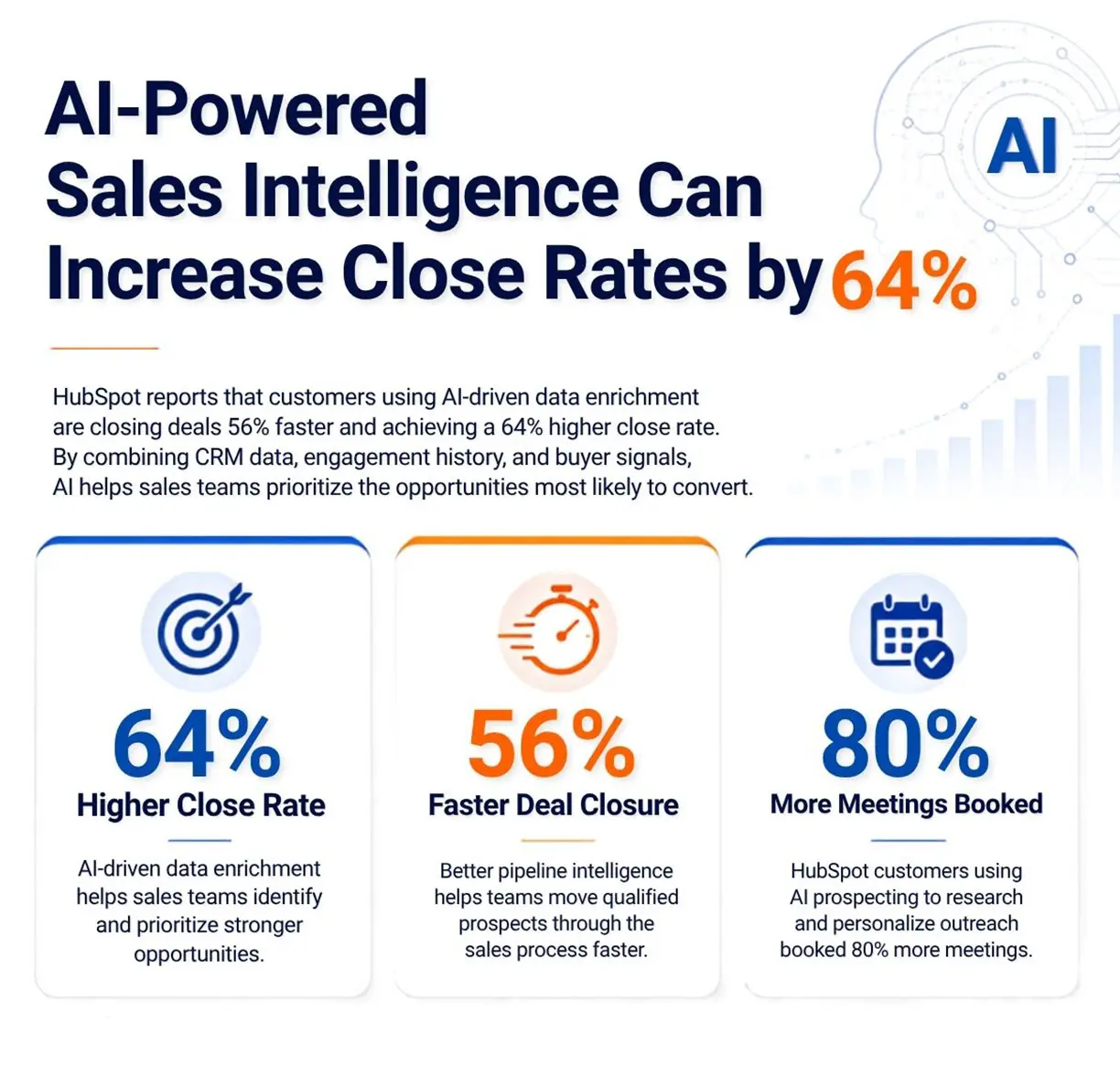
Integrating AI-powered lead scoring into the lead generation and conversion process helps change the overall scenario by identifying patterns of future conversion using behavioural signals, firmographic data, and engagement history. Thus, the sales department will get a ranked list of leads based not only on the occurrence of the activities but on the actual conversion probability as well.
As many organizations are cooperating with digital marketing consulting services, this integration of marketing and sales efforts is considered one of the best examples of how AI can impact departmental operations, since it eliminates issues at the lead handoff level.
Using AI in Content Marketing
Content marketing has traditionally struggled with the question of volume. In order to generate enough material to create a thorough discussion of an issue, while still meeting the requirements about quality and the need to publish regularly, marketing managers often face insurmountable difficulties. Today, new technologies have helped to change the economics of content production while drastically decreasing the amount of work at the same time.
AI writing technologies definitely do not substitute experienced editors and strategists. Instead, they help to shorten the time necessary to prepare the first drafts, conduct research on topic clusters, identify the problem areas that should be addressed in the content, and make preliminary versions of headings. A group of marketing experts that published just two articles each week can now produce five or six pieces of content with the same number of writers in the company.
Conversion Rate Optimization
Getting visitors to a site is only part of the challenge. Converting those visitors into leads or customers depends on how the experience is structured, and AI has made it significantly faster to run the experiments needed to improve conversion rates.
Traditional A/B testing requires enough traffic to reach statistical significance, which can take weeks for lower-volume pages. AI-powered multivariate testing allocates traffic dynamically to winning variations sooner, compressing the time needed to find improvements.
AI in B2B Marketing: Different Stakes, Different Approaches
B2B marketing operates under different conditions than consumer marketing. Purchase decisions involve multiple stakeholders, sales cycles that can last months, and contract values that make each lost deal costly. The room for imprecision is considerably narrower.
Account-Based Marketing at Scale
Account-based marketing focuses resources on a specific list of target accounts rather than broadcasting to a wide audience. This approach has always made strategic sense for B2B companies, but executing it at scale without AI was operationally difficult.
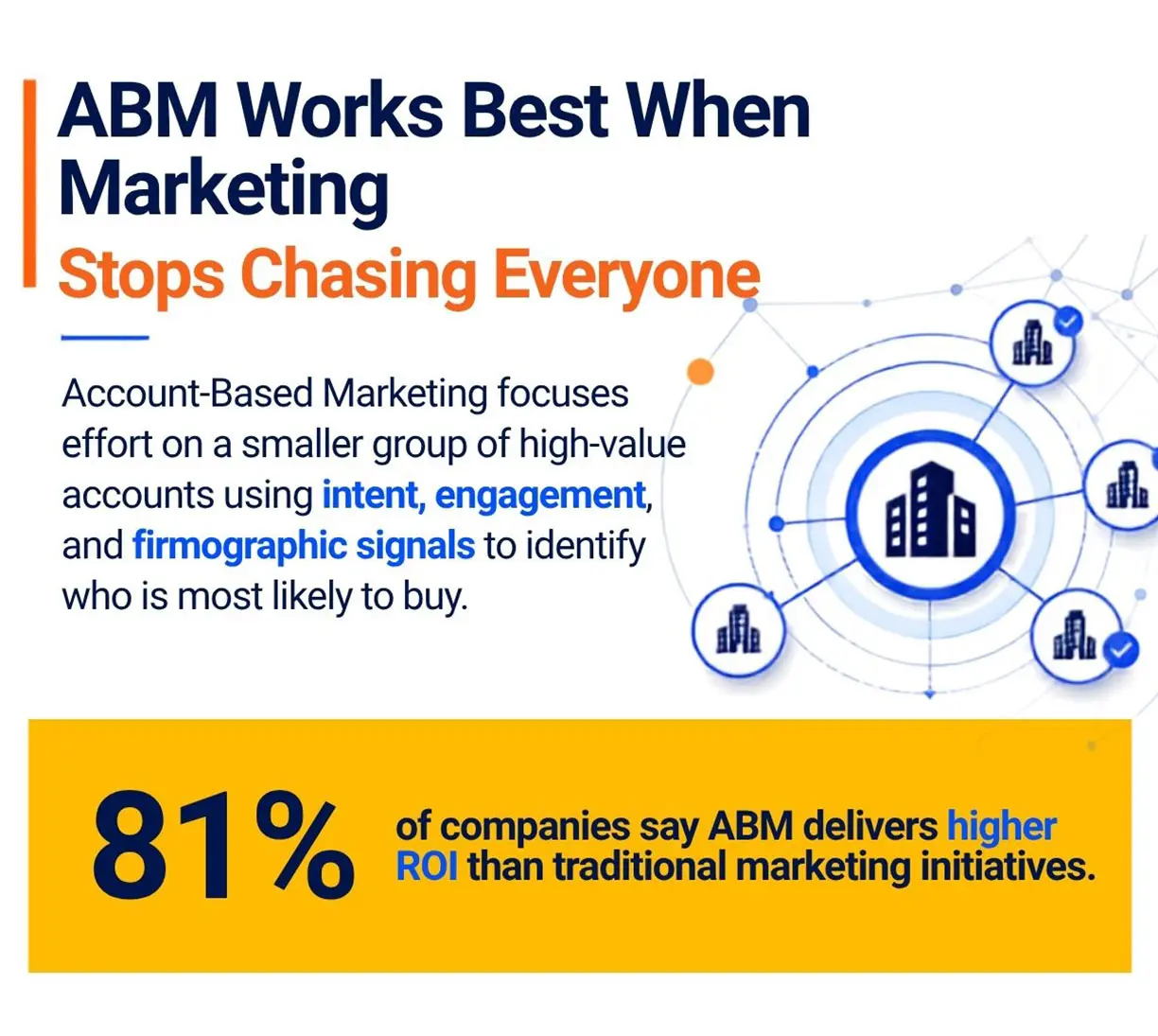
AI-powered account-based marketing platforms identify which companies in a target market are most likely in-market for a purchase conversation, using technographic data, hiring signals, content consumption patterns, and third-party intent data. This intelligence allows marketing and sales teams to prioritize outreach to accounts that are actually ready to engage.
Companies that specialize in B2B digital marketing services have built significant practice areas around AI-assisted account-based approaches, because the combination of precision targeting and multi-channel outreach consistently produces results that justify the investment.
Multi-Touch Attribution
One of the persistent challenges in B2B marketing is connecting revenue back to specific marketing activities. A sales cycle lasting six months, involving touchpoints across email, events, paid ads, and direct sales conversations, does not lend itself to simple first-touch or last-touch attribution. The standard models miss most of what actually happened.
AI-powered attribution systems track the full interaction history across a buying group and assign weighted credit to each touchpoint based on its demonstrated role in advancing the deal. A webinar that generated no immediate response but preceded a spike in demo requests gets appropriate credit. A retargeting ad that re-engaged a prospect who had gone cold shows up in the model as a meaningful contribution.
Marketing leadership gets a more accurate picture of which investments are producing revenue and which are not. Budget decisions based on AI-attributed data are considerably more reliable than those based on last-click models or anecdotal sales feedback. Over time, this kind of attribution visibility compounds: each planning cycle benefits from the data generated by the one before it.
Choosing the Right Marketing Partner
Not every business has the internal resources to build and manage AI-driven marketing programs independently. For many organizations, working with an external team is the practical path forward.
Evaluating a Potential Marketing Partner
The market for marketing partners has grown considerably, and the quality difference between providers is significant. A capable digital marketing company should be able to explain its use of AI tools specifically, not generically. Saying "we use AI to optimize campaigns" is vague. Describing which platforms are in use, how they connect with client data, and what the reporting workflow looks like is actually useful.
They should also showcase case studies that reflect relevant industry experience. AI marketing tools perform differently across verticals, and a provider that has delivered results in a comparable context brings a different level of readiness than one working in your category for the first time.
Evaluation criteria worth applying to potential marketing partners:
- Transparent reporting with direct access to underlying data, not just summary dashboards
- Clear ownership of campaign strategy, not just execution
- Specific evidence of how AI tools are used to produce measurable business outcomes
- Communication practices that give clients visibility before decisions are finalized, not after
- A documented approach to data privacy that accounts for regional regulations
The Value of Specialized Consulting
For businesses working through a significant strategic change, like entering new markets, restructuring the marketing function, or rebuilding data infrastructure, digital marketing consulting services offer a different kind of value than an ongoing agency relationship.
Consultants focus on diagnosing the strategic situation and recommending a course of action. They typically do not execute campaigns but help the organization build the plan and the internal capability to act on it. For companies with larger internal marketing teams, that distinction matters considerably.
Common Challenges When Adopting AI in Marketing
Look out for these challenges when you decide to incorporate AI into your marketing strategies.
Data Quality and Availability
AI tools require clean, structured, well-organized data to function usefully. Many businesses discover when they begin implementing AI that their data is fragmented across multiple systems, inconsistently formatted, and missing key attributes that the LLM needs to generate meaningful outputs.
A common scenario: a company invests in an AI-powered lead scoring platform and immediately finds that half of the CRM records lack the fields the model relies on. Industry, company size, and prior engagement data are either absent or recorded inconsistently across different teams. The AI still produces a score, but that score reflects data gaps as much as it reflects real prospect quality.
This is not a reason to delay adoption, but it is a reason to treat data infrastructure as a first priority. Investing in CRM hygiene, consistent tagging practices, and unified customer data platforms before deploying AI tools pays off in the quality of everything those tools produce. Organizations that do this preparation work typically see better AI performance within the first campaign cycle.
Privacy Regulations and Consent
Several laws pertaining to data privacy and data usage, like GDPR and other regulations, impose strict limitations on the collection and use of behavioural data for marketing purposes. As browsers have started to limit access to cookie data, AI marketing technologies, which are based on third-party cookies, have lost stability.
Companies engaged in AI marketing should ensure that their data practices are legally verified, introduce explicit consent procedures, and promote the usage of first-party data instead of third-party solutions due to the risk being increasingly significant.
Managing AI Output Quality
The content created by AI, the audience categories proposed by AI, and the results predicted by AI all need to be examined by real people. Treating AI outputs as always accurate is the most frequent mistake in the use of these tools by businesses.
AI systems have access to well-documented historical data but cannot recognize new trends in the market, the entrance of new competitors, or changes in buyer moods that are not accounted for in the data. Good marketers learn how to analyze AI outputs instead of accepting them as given.
For companies that are prepared to progress, the actual starting point isn't about selecting a tool. It's about carefully evaluating how strong their data foundation is, the skills their teams possess in-house, and whether there is a need for a digital marketing services provider to advance their efforts. Those who get the order of actions right will experience the results sooner and avoid the troubles related to the introduction of AI processes that are not ready for it. This applies to the businesses that are doing quite well at the moment.


